
Property Asset Criticality and Maintenance Priorities
Rank property equipment by service consequence, dependencies, condition evidence and recovery options before prioritizing maintenance or replacement.


Keep importance and condition distinct
Criticality describes the consequence of losing a function. Condition describes the evidence about the current asset. A relatively new pump can serve a critical function, while an old decorative feature may have a lower service consequence. Keep both dimensions visible instead of compressing them into an unexplained age-based score.
Build an asset record with identifier, location, served function, ownership responsibility, technical reviewer, maintenance requirement and known limitations. Confirm which components belong to the association, owner or utility before assigning action.
Map dependency and recovery
Ask what stops when the asset is unavailable, which other systems depend on it and whether an independently verified alternative exists. Record usable redundancy separately from equipment that merely looks like a spare. A backup with no test evidence, unsuitable capacity or shared failure exposure may not support the assumed recovery plan.
Record access constraints, specialist availability, replacement lead-time evidence and temporary-service options. These details shape the operational consequence of a failure. Do not assume that emergency procurement can immediately restore a specialized or unavailable component.
Use a transparent qualitative ranking
Define a small set of property-specific consequence levels covering safety-related direction, essential service disruption, financial exposure and resident impact. Have the appropriate technical and governance reviewers validate the interpretation. Explain why each asset has been placed in a level.
Add condition evidence, known defects and uncertainty alongside criticality. Use uncertainty to request investigation, not to invent a probability. A color-coded matrix is a coordination tool and cannot certify equipment safety, remaining life or engineering adequacy.
Connect ranking to funded actions
For each priority, state the next action: inspect, restore maintenance, test the alternative, obtain a scoped repair proposal or investigate replacement. Link the action to an owner, decision date and acceptance evidence. Separate immediate technical directions from longer-term planning choices.
Connect replacement options to reserve planning and cash timing with the relevant specialists. Record the cost basis and dependencies of the proposal. Revisit ranking after a service change, new failure evidence, a confirmed backup test or a significant capital project.
Worked example: two HVAC units with different roles
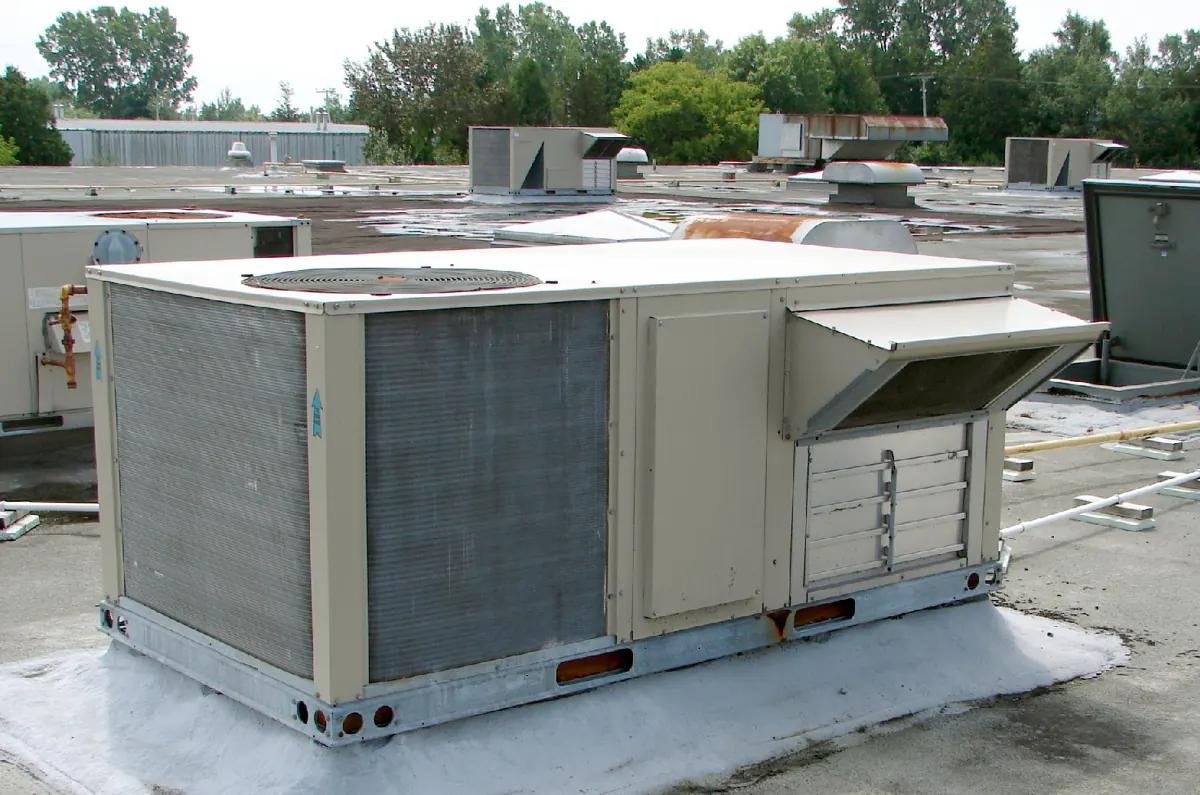
Hypothetical example: one unit serves a staffed operations room and another serves a lightly used meeting room. Identical age does not make their disruption consequence identical. The review records use, alternative space, technical condition and repair access for each.
The resulting priority should explain the service impact and available evidence. It should not claim a universal replacement age or declare either unit safe without the appropriate technical review.
Property Asset Criticality and Maintenance Priorities checklist
A reusable control-definition worksheet. Add property-specific owners, dates, evidence links and status before using it as an action record.
Download the CSV checklist to assign an owner, add dates, and record the evidence for your property.
These rows define suggested controls, not completed property findings. Add a row ID, owner, due date, status and evidence link to your working copy. See the working-copy instructions and reuse terms.
12 checks shown
No check matches those filters. Try a different term or area.
| Review area | Check | Evidence to request | Decision question |
|---|---|---|---|
| Inventory | Assign asset identifier and location | Asset register | Can the component be identified reliably? |
| Inventory | Confirm ownership and service function | Responsibility and system map | Who owns the action? |
| Consequence | Describe failure impact | Service dependency record | What function would be lost? |
| Consequence | Define property-specific levels | Approved ranking definitions | Is the ranking understandable? |
| Recovery | Verify alternative arrangements | Specialist review and test | Is the alternative actually usable? |
| Recovery | Record restoration constraints | Lead-time and access evidence | What could delay recovery? |
| Condition | Link current condition evidence | Inspection and service history | What is known about current condition? |
| Condition | Separate unresolved uncertainty | Investigation register | What still needs a professional assessment? |
| Action | Identify the next intervention | Prioritized action plan | What practical action is justified? |
| Action | Connect funding and dependencies | Budget and reserve review | Can the action be delivered as planned? |
| Review | Define acceptance evidence | Inspection or test requirement | How will completion be verified? |
| Review | Reassess after changes | Updated criticality rationale | Has the service or evidence changed? |
Frequently asked questions
Is equipment age enough to determine priority?
No. Record condition, served function, dependencies, failure consequence and recovery options. Age is one contextual field.
Should a numeric score determine funding automatically?
Use scores only with defined scales and a documented rationale. Funding also depends on technical findings, authority, cost, timing and available alternatives.
What evidence supports redundancy?
Record the alternative's relevant capacity, operating arrangement and test results through the responsible specialist. An untested spare should not be described as confirmed continuity.