Tampa Bay resilience resource

Prepare the property before the forecast becomes urgent.

Storm readiness is a leadership system: clear authority, current contacts, verified vendors, accessible records, and a communication plan that works under pressure.

By Published Updated

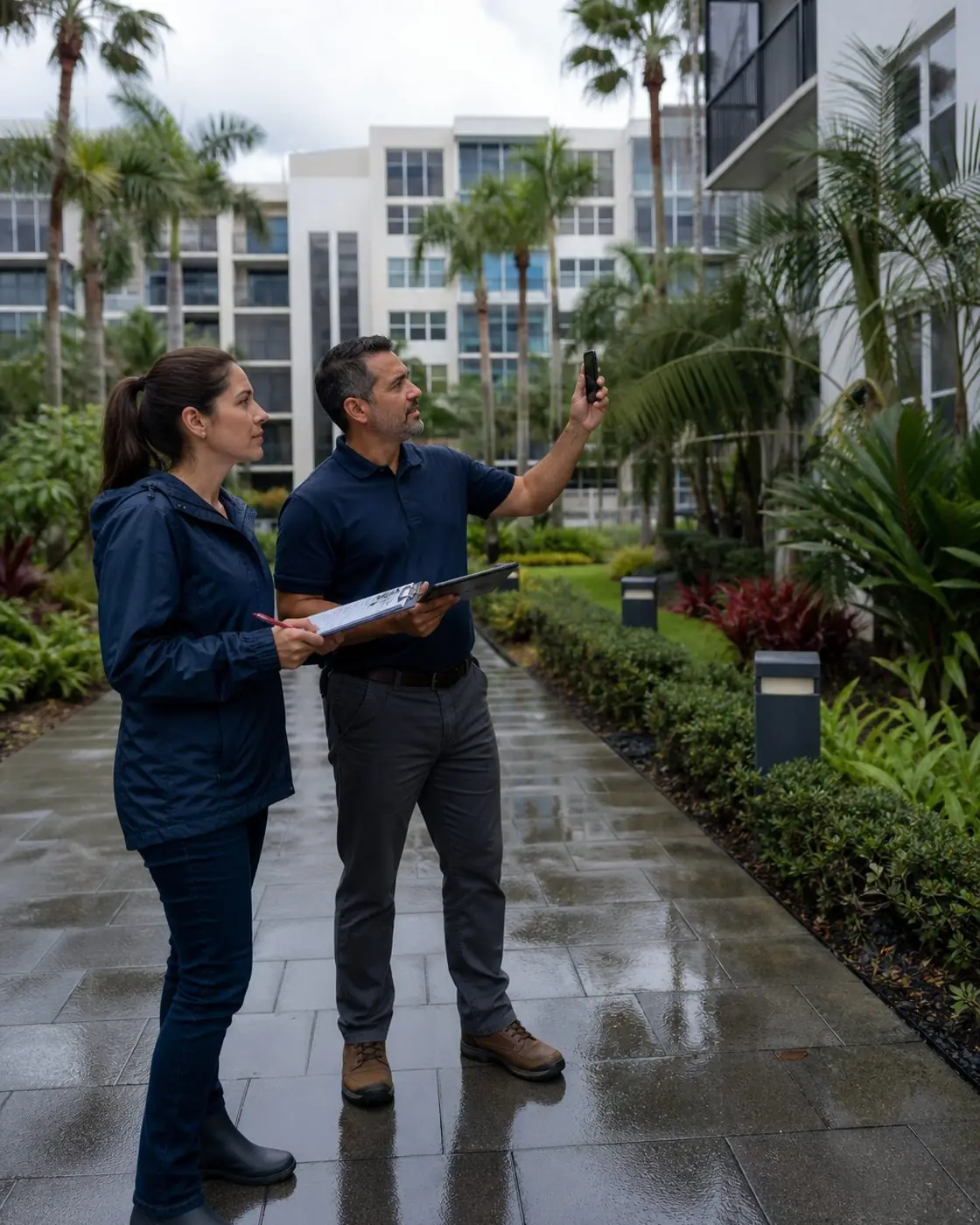
Property team documenting a post-storm exterior assessment
Readiness principle

Plan for the handoffs, not only the event.

The largest failures during a severe-weather event often occur between teams: unclear authority, inaccessible records, vendor confusion, inconsistent updates, or damage documentation that starts too late.

Build the plan around the first hours after an alert, the first assessment after conditions allow, and the first weeks of recovery. Keep it accessible outside any single email inbox, system, or individual’s memory.

  • Confirm emergency decision authority and escalation sequence
  • Maintain primary and backup contacts for critical vendors and utilities
  • Document pre-event property condition and critical assets
  • Prepare resident, owner, tenant, and staff message templates
  • Establish a post-event inspection, damage log, and recovery cadence
Preparedness record set

Keep these items current and accessible.

Authority and contact

  • Emergency roles, authority limits, and board contact sequence
  • Manager, maintenance, security, and after-hours escalation roster
  • Resident communication channels and accessible-language needs
  • Current vendor, utility, insurer, and public-agency contacts

Property and systems

  • Critical asset inventory and shutoff information
  • Roof, drainage, generator, elevator, access, and life-safety records
  • Current inspection reports, warranties, permits, and open repairs
  • Pre-event photographs and site-condition baseline

Vendor readiness

  • Emergency scope, mobilization expectations, and service territory
  • Backup vendors for restoration, security, debris, and critical repairs
  • Insurance certificates, access arrangements, and documentation rules
  • Clear approval and communication process for emergency work

Recovery controls

  • Damage log, photo protocol, invoice and change-order controls
  • Claim documentation workflow and professional-advisor contacts
  • Safety inspection and re-entry communication plan
  • Recovery milestones, reporting cadence, and decision register
Three-phase response

Make readiness operational.

  1. Before the seasonUpdate contacts, authority, vendor commitments, records access, property baseline, and a concise emergency decision protocol.
  2. When an alert is issuedActivate the approved communication, confirm vendor readiness, protect records, monitor critical systems, and document decisions.
  3. Immediately afterPrioritize life safety, secure access, perform condition assessments, preserve evidence, and communicate verified facts.
  4. First recovery weekTrack urgent repairs, insurance or professional-advisor needs, vendor work, resident impacts, cost commitments, and evolving risk.
  5. Recovery periodUse a visible log for work scope, approvals, invoices, milestones, unresolved hazards, and communication commitments.
  6. After-action reviewDocument what worked, failed, or delayed response; refresh the plan while the evidence is still current.
Important boundary

Use specialists for property-specific risk decisions.

This checklist supports organization and oversight; it does not replace emergency-management direction, building inspections, engineering, insurance, legal advice, restoration expertise, or official alerts.

Florida’s official emergency resources and local authorities should guide protective action. For condominium-related mitigation program information, see the Florida Department of Financial Services’ current property insurance and condominium program updates.

← Return to all property insights

Working checklist

Storm readiness verification checklist

Use this before a severe weather alert and revisit it after each exercise or event. Follow current official instructions for evacuation, shelter, and emergency response.

Download the CSV checklist to assign an owner, add dates, and record the evidence for your property.

18 checks shown

Storm readiness verification checklist · September 26, 2026
Review areaCheckEvidence to requestDecision question
Authority Incident lead Named lead backup and decision limits Who activates the property plan?
Authority Escalation path Board manager staff and emergency service contacts Who takes over if the first contact is unavailable?
People Resident needs Opt in assistance needs and privacy controlled contact method Who may need an accessible update?
People Staff coverage Safe staffing plan relief and check in process Who can work without unsafe expectations?
Communication Message templates Alert closure shelter status and recovery updates Can a clear message be sent quickly?
Communication Channel backup Email text portal notice board and phone options What works if power or internet fails?
Property Critical assets Equipment locations shutoffs and operating instructions What must be secured first?
Property Drainage Roof drains inlets pumps and known trouble spots What should be inspected before heavy rain?
Property Generators Service status fuel plan and safe operating instructions Is backup power ready for its intended load?
Property Elevators Vendor contact shutdown and restart procedure Who controls elevator decisions?
Property Document baseline Dated photos and condition records for critical assets What proves the pre event condition?
Vendors Emergency vendors Primary backup scope access and mobilization expectations Who can respond if the primary vendor cannot?
Vendors Insurance contacts Policy access claims contact and documentation guidance Who will report damage and how?
Continuity Remote records Secure access to contacts contracts and drawings Can the team act away from the property?
Continuity Payment authority Emergency approval and expense logging process How will urgent costs be recorded?
Recovery Safe re entry Qualified assessment and access control process Who declares an area safe to enter?
Recovery Damage log Location date photo description owner and next action Can each loss be followed to closure?
Recovery Status cadence Update schedule unresolved risks and decision queue When will owners hear the next verified update?
Working method

Rehearse the handoffs

A plan is useful only when the named people can execute it.

Run a short tabletop exercise before the season: assume a power loss, inaccessible manager, delayed vendor, and unavailable primary messaging channel. Ask who authorizes protective work, where the current contact list lives, how staff confirm receipt, and how residents will receive the first verified update. Record failures as assigned actions and retest them.

Prepare a baseline condition set for roofs, openings, drainage, equipment, and known defects where practical. After an event, that baseline can help distinguish preexisting conditions from new damage. Confirm the emergency vendor scope and mobilization contact, then use the post-storm recovery and insurance claim documentation guides for the response phase.

Need a neutral review of preparedness or recovery controls?

Start a confidential conversation